Indoor FPV video: one continuous take to walk through a property
FPV means first-person view: the pilot sees what the drone sees. An indoor FPV video is a single flight with no cuts through a building.
 Giulio Palumbo SchiavonePhotographer · ENAC drone operatorPublishedUpdatedReading5 minWhatsAppLinkedIn
- 01FPV stands for First Person View: the pilot sees live what the drone sees. An indoor FPV video is usually a single shot with no cuts.
- 02The work is done before take-off: the route is studied room by room, with the spaces tidy, the lights on and the doors open.
- 03In the open category EASA asks for an observer beside the pilot for FPV flying; if the flight leaves the building, the area is checked on D-Flight.
In this article
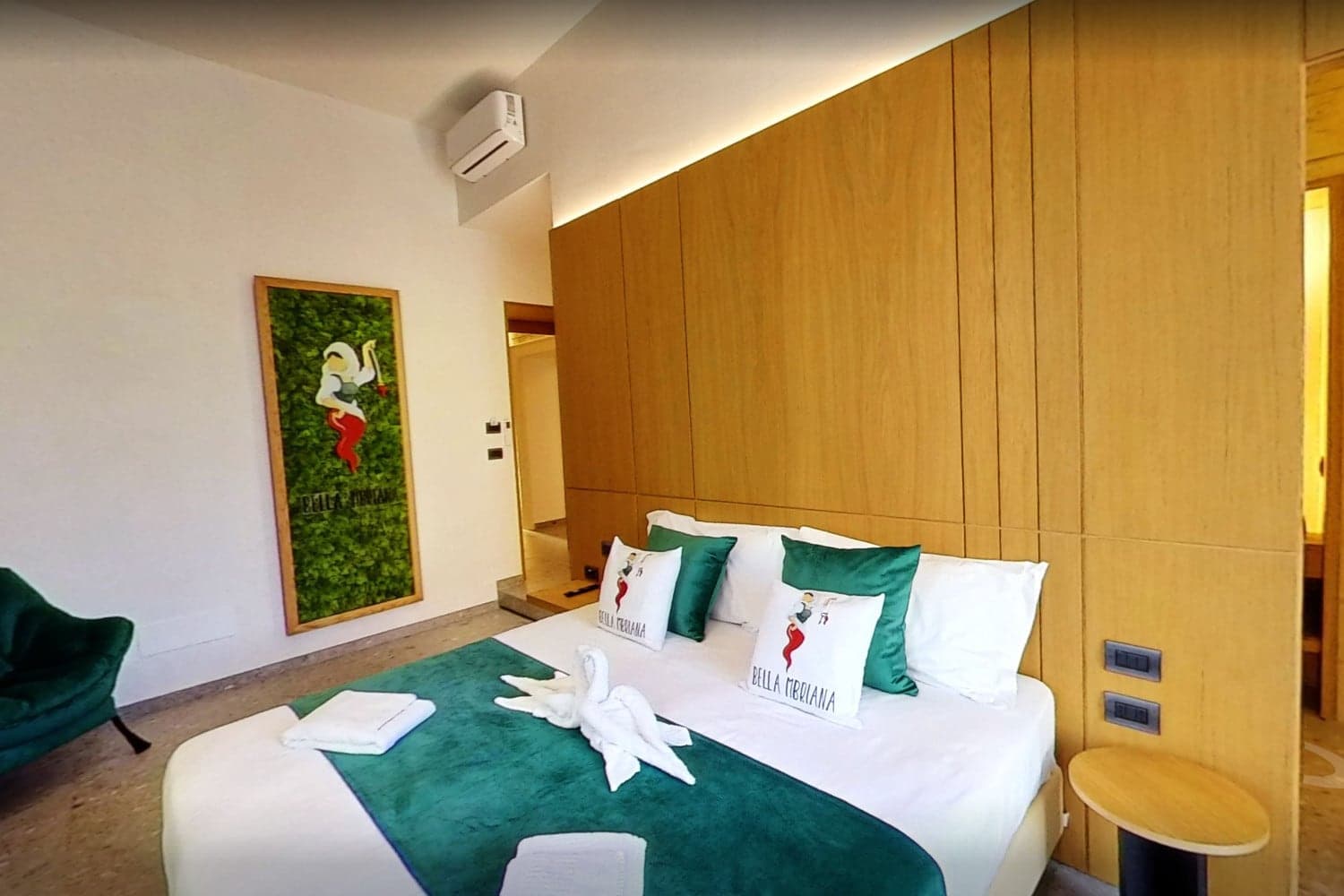
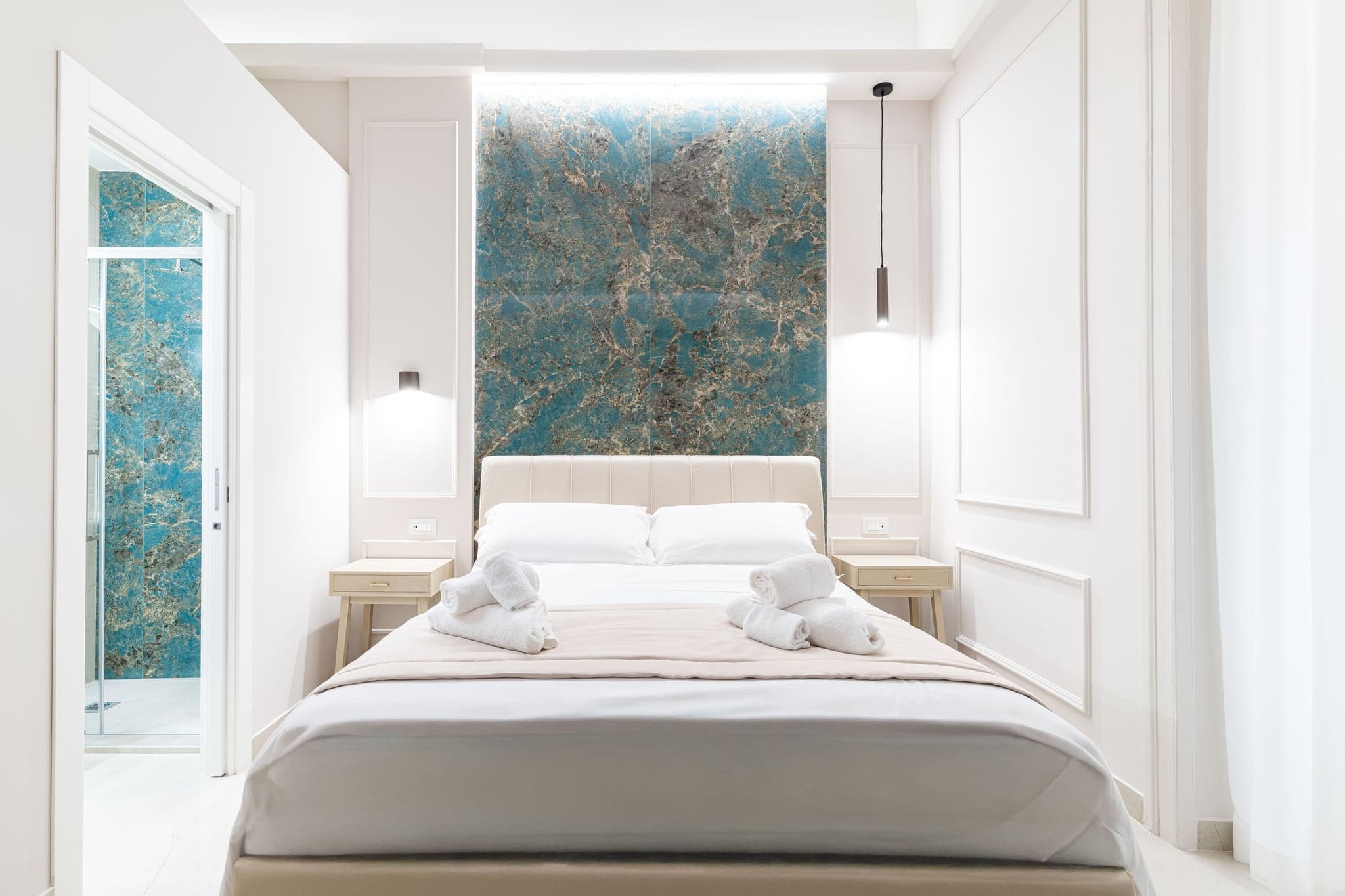
Most property listings show you one room at a time, each cut off from the next, and you are left to imagine the rest. A flight with no cuts changes that. The camera passes from one room to the next without interruption, and you understand how the house is laid out as if you were walking through it. This kind of video, the indoor FPV video, suits a villa as well as a hotel, and in general any property that is easier to understand when you move through it.
What does FPV drone mean?
FPV stands for First Person View. The pilot wears goggles and sees live what the drone’s camera sees, as if sitting on board. An indoor FPV video uses this way of flying to move between rooms and through doors, usually in a single shot, the so-called one-take: continuous filming with no cuts.
How is it different from a photo or a virtual tour?
A photo shows one room at a time, and it is up to you to imagine how the bedroom connects to the living room. A 360° virtual tour lets you do the moving, go back and stop wherever you like. An FPV flight takes you along a route chosen beforehand, at a pace set by whoever shoots it, from the front door to the last room. Because there is no edit jumping from one room to the next, you can see how the spaces connect and how far apart they are, and the two formats complement each other.
Who needs an indoor FPV video?
It suits anyone with a property that is easier to understand by walking through it, such as a holiday home that has to stand out among similar listings. In an FPV video for a hotel, where the entrance leads to the rooms along corridors, the flight shows that sequence of spaces as it is. In a showroom or a car dealership it shows the dimensions and the distances between one car and the next, which a single photo struggles to convey, and the same goes for a shop.
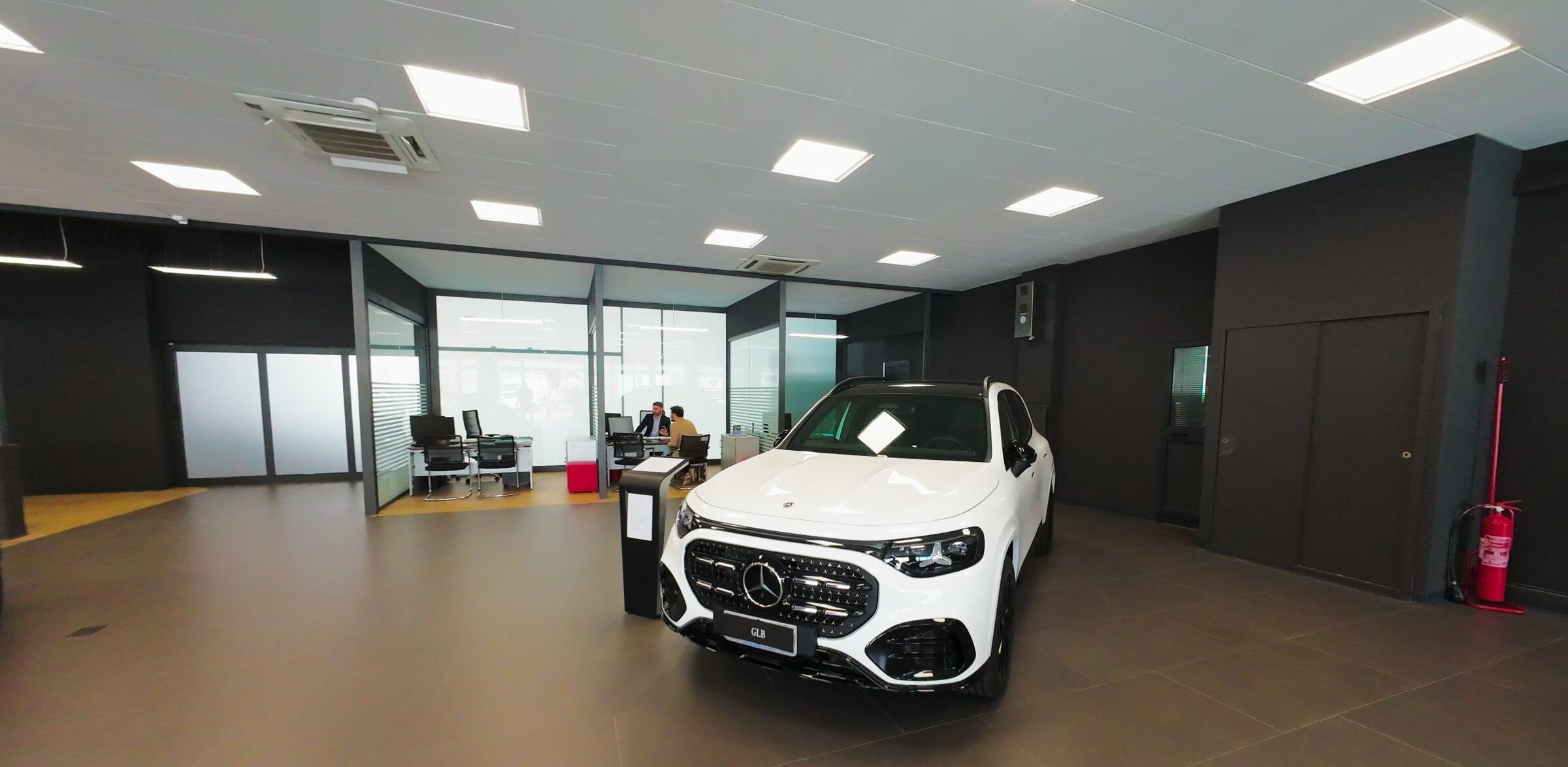
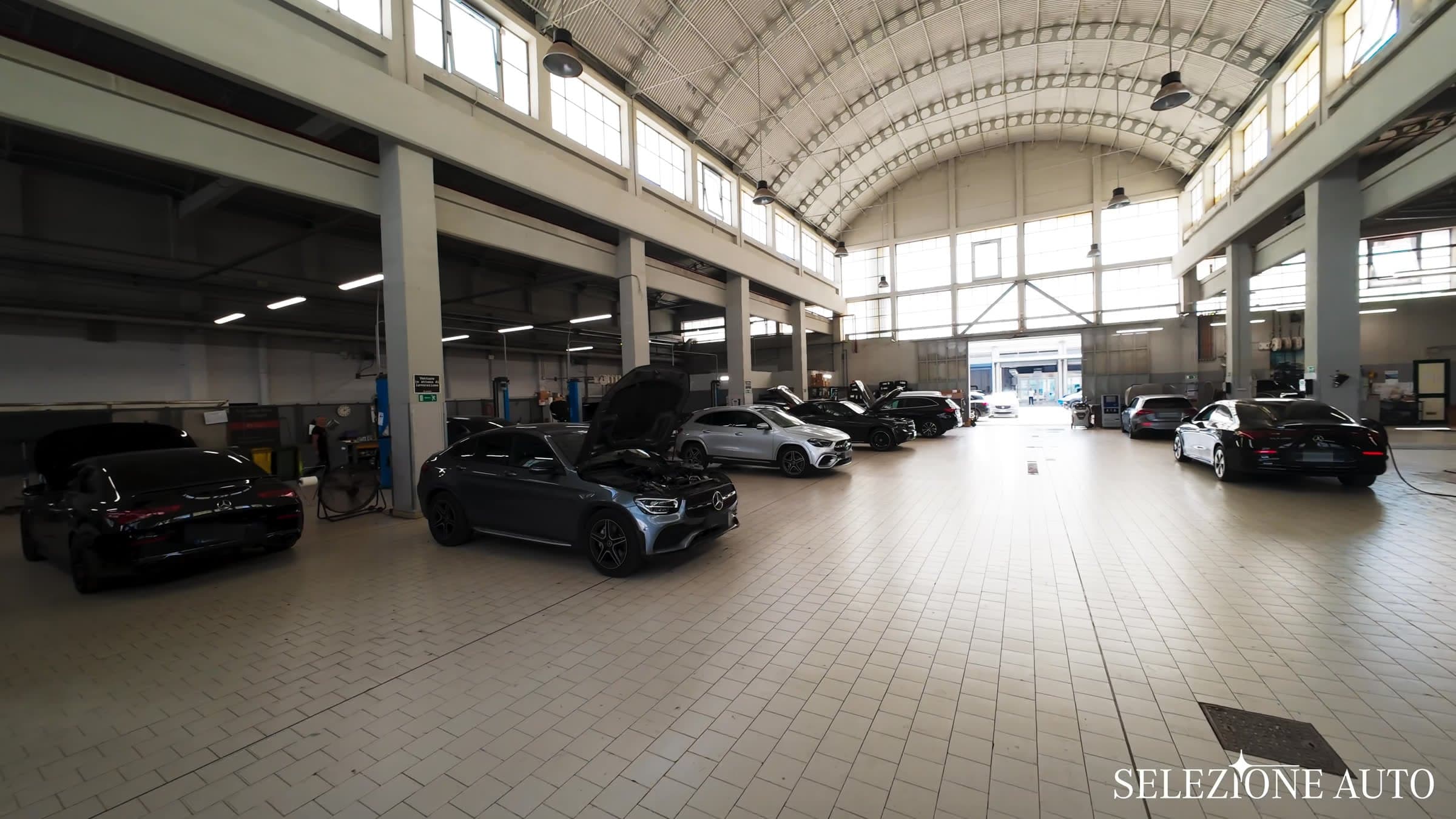
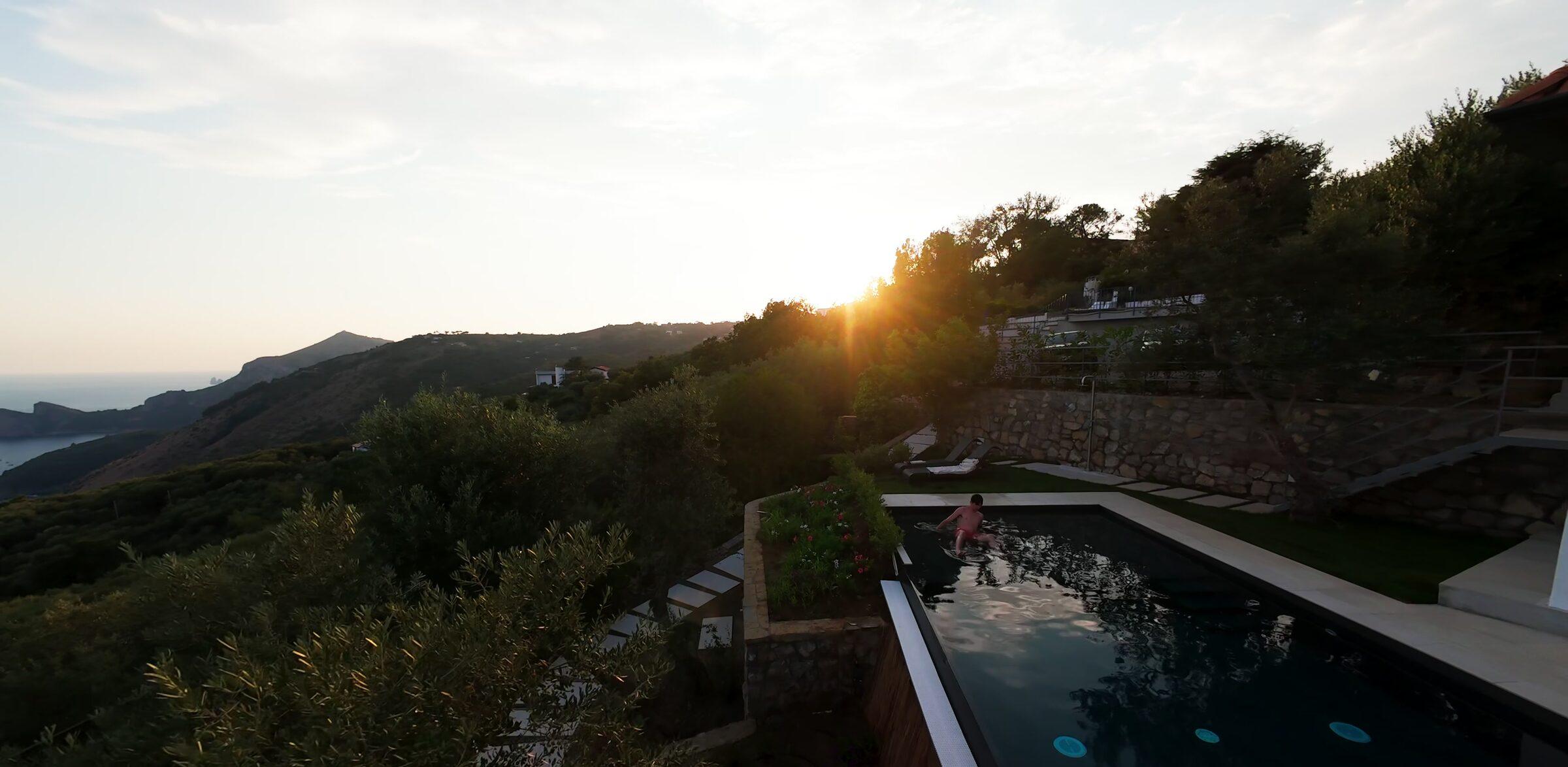
In Naples, in the FPV video for Mercedes-Benz Napoli, the flight crosses the showroom and passes over the cars on display. Among the scenes there is also the workshop, under a large vaulted roof, with the vehicles in a row. At Massa Lubrense, for the holiday home Villa Dequinz, the same FPV flight takes in both the kitchen and the swimming pool at sunset, with the sea in the background. The client wanted the listing to make viewers say ‘wow’, and the flight was the part designed for that, together with the interior photographs, the virtual tour and the videos.
How do you plan a one-take drone flight?
The real work is done before take-off, on the route. I study it room by room: which doors must stay open, where the passage is narrow, where the light comes from, where mirrors and glazing may reflect what must not appear, what the viewer needs to see and in what order. In a single shot there are no cuts in which to hide a mistake, and if something goes wrong halfway through the flight, you start again from the beginning. For this reason, before flying I check the spaces and the people present, then the permits, so that on the day of the shoot the route is already decided.
Your part is a simple bit of preparation. The spaces need to be arranged as for a photo shoot: tidy, with the lights on and the doors open. Then let everyone who will be in the building during the flight know, whether guests or staff, and tell each person where to stand. Someone leaving a room at the wrong moment can force a restart.
Which rules matter?
EASA’s rules on FPV flying in the open category start from one point: the pilot must keep the drone in sight at all times. With the goggles on, the pilot cannot see it directly, because the goggles do not give a field of view wide enough to notice the dangers around. As EASA’s frequently asked questions on flying with goggles explain, an observer is therefore needed, who watches the drone at all times and stands next to the pilot to give warning straight away. Also in the open category, people who are not involved may not be overflown. If the flight leaves the building, the rules for outdoor flying apply and the area must be checked on D-Flight before the date is fixed. The rules for flying a drone in a city are explained in the article on drones in built-up areas.
How do you ask for a quote?
The quote is tailored, because it depends on the building, the length of the route and the permits. At the end you receive a video that is already colour-graded and ready for your website and social media. I do the colour correction myself, and I work in Naples as well as across Italy and Europe.
Before writing to ask for FPV video in Naples or elsewhere, try this. Start at the front door and walk to the last room you would like to show, noticing where you stop and which doors you open. That walk is already a draft of the route the drone will have to follow, and described in two lines it is enough to start the conversation.
FAQ
What does FPV drone mean?
FPV stands for First Person View. With an FPV drone the pilot wears goggles and sees live what the drone’s camera sees, as if on board.
Who needs an indoor FPV video?
Anyone with a property that is easier to understand by moving through it, such as a villa, a holiday home, a hotel or a showroom. An indoor FPV flight shows how the rooms connect, from the entrance to the last room.
How is it different from a virtual tour?
In a virtual tour you move on your own and go back wherever you like. In an indoor FPV video you are taken along a route chosen beforehand, at a pace set by whoever shoots it. The two tools complement each other.
What needs to be prepared for an indoor FPV video?
For an indoor FPV video the spaces need to be prepared as for a photo shoot: tidy, lights on, doors open. Anyone present during the flight must know about it and stand where planned.
How much does an indoor FPV video cost?
The quote for an indoor FPV video is tailored and depends on the building, the length of the route and the permits. To get one, write and describe the place.
Do you also work outside Naples?
Yes, I shoot indoor FPV videos across Italy and Europe.