Drones in built-up areas: permits, rules and lead times to plan for
Aerial footage in a city is possible, but not always and not overnight. What the rules say, what I check before every flight and what I need from you.
 Giulio Palumbo SchiavonePhotographer · ENAC drone operatorPublishedUpdatedReading7 minWhatsAppLinkedIn
- 01In Italy every flight follows the EU regulation 2019/947 and the UAS-IT regulation of ENAC, the Italian Civil Aviation Authority: the operator is registered on D-Flight and insured.
- 02Near people the “open” category has tight limits, which depend on the drone’s class: when a flight goes beyond them you need a declaration or an authorisation, and therefore time.
- 03On D-Flight you check the geographical zones: near airports and sensitive areas flying may be banned or conditional. Check before you set the date.
In this article
The rules in brief
Since 31 December 2020 drones in Italy, as in the rest of Europe, follow regulation (EU) 2019/947. Operations fall into three categories by risk:
- Open, low risk, with three subcategories: A1, A2 and A3;
- Specific, when you go beyond the limits of the open category;
- Certified, for the highest-risk operations.
ENAC, the Italian authority, applies the EU rules through its UAS-IT regulation, which makes third-party liability insurance compulsory. Operator registration is required by the EU regulation itself (Article 14); in Italy it is done on D-Flight.
What changes in a built-up area
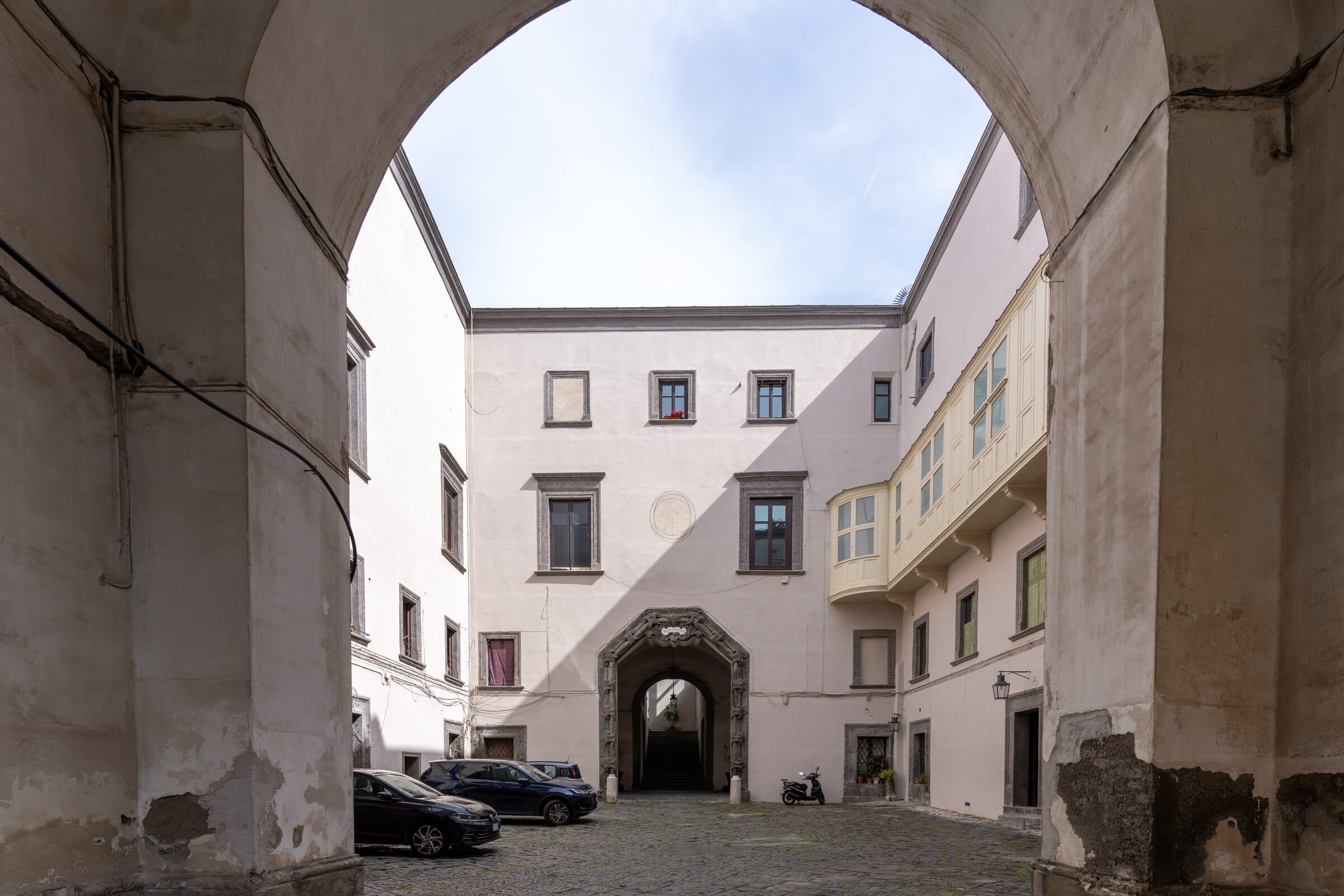
In a city the issue is people. In the open category you never fly over assemblies of people, and how close you may get to anyone else depends on the drone’s class: a class C1 drone flies in subcategory A1, without deliberately overflying uninvolved people; a C2 drone, with the A2 certificate, keeps at least 30 metres from them (5 in low-speed mode); in A3 you fly far from people and at least 150 metres from residential, commercial, industrial or recreational areas. For footage close to a building in a town centre, with streets and passers-by around, the open category is often not enough.
You then move to the specific category: the operation is assessed case by case and flown under a declaration based on a standard scenario or with an ENAC authorisation. That means paperwork, cordoning off the ground area when needed and sometimes waiting for an answer. This is why city footage can’t be booked overnight.
D-Flight and geographical zones
D-Flight is Italy’s drone portal. Operators register there and get the QR code to put on every drone. It also shows the geographical zones where flying is banned, restricted or conditional: around airports, over infrastructure and sensitive areas. In Naples, for example, the proximity of Capodichino airport affects a large part of the city.
What I check before every flight
- the zone on D-Flight, for the exact spot and the height needed;
- whether the open category is enough and, when it isn’t, which permits are needed and who has to request them;
- the take-off and landing point, with permission from whoever is responsible for it;
- who will be around during the flight and how to keep them safe;
- weather and wind the day before and that morning.
I have flown professionally since 2017, when I obtained ENAC’s qualification for critical operations under the rules of the time, and today I hold the A1/A3 certificate: this is how I prepare drone shoots and FPV flights.
What I need from you
- the exact address and what you want to show from above;
- permission to take off from the property, or from an agreed area;
- possible time slots and whether people or works will be on site;
- some flexibility on the date, for the checks and the weather.
Rules change: this guide describes the situation in October 2026. For a specific case, ENAC (enac.gov.it) and D-Flight (d-flight.it) are the official sources.
FAQ
Can a drone under 250 grams fly anywhere?
No. Even the lightest drones must respect the geographical zones and, if they carry a camera, the operator must be registered on D-Flight.
How long do permits take?
It depends on the zone and the type of operation. That’s why it’s worth talking before setting the date: sometimes a D-Flight check is enough, sometimes a declaration or an authorisation is needed.
Can people be filmed during the flight?
I keep to the distances set by the operation’s category. If people are recognisable in the footage, privacy law applies too: we discuss it beforehand, together with the flight plan.